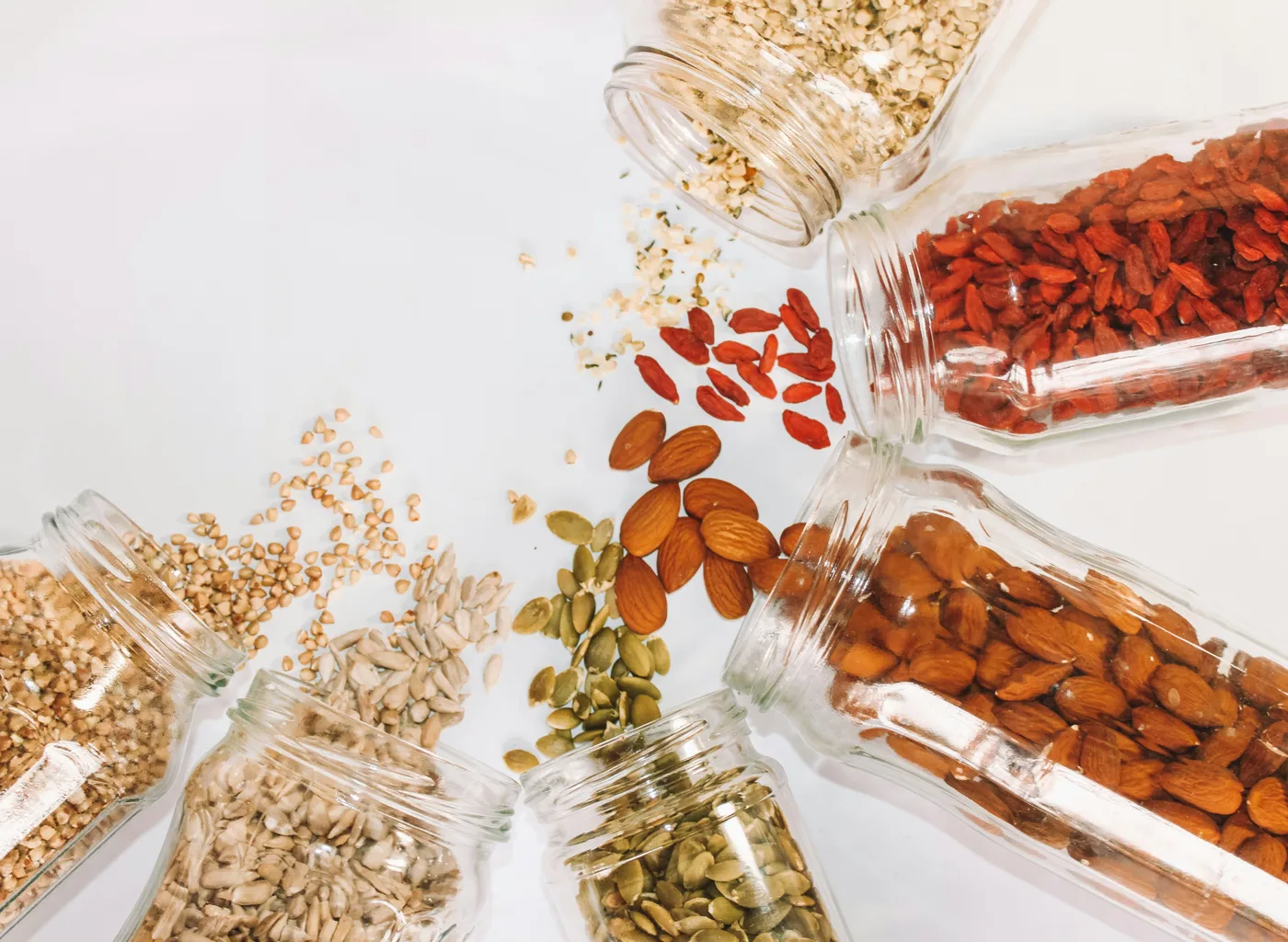
Nuts and seeds are everywhere in the wellness world right now, along with nut milks, nut butters, and seed oils. They are marketed as clean, plant based, and good for everyone. But are they actually kind to your gut, your skin, and your metabolism? My position is clear: nuts and seeds are PUFA heavy and, for most of the clients I work with, they are not especially gut friendly or skin friendly.
Re-evaluating Nuts and Seeds:
Nuts and seeds are everywhere in the wellness world right now, along with nut milks, nut butters, and seed oils. They are marketed as clean, plant based, and good for everyone. But are they actually kind to your gut, your skin, and your metabolism? My position is clear: nuts and seeds are PUFA heavy and, for most of the clients I work with, they are not especially gut friendly or skin friendly. They do contain some minerals and vitamin E, and a single handful is not poison. The problem is the daily load, how hard they are to digest, how easy they are to overdo, and what they replace. In my practice, eating a lot of them often does the opposite of what people expect. They can be hard to digest, they can slow metabolic rate, and they can quietly add a lot of inflammation underneath acne and gut symptoms. That is exactly why nuts and seeds sit on the hard to digest list I give clients working on their gut, alongside grains (white rice is ok), legumes, cruciferous vegetables and raw greens and greens powders, while fruit, bone broth, raw dairy, organ meat, butter and ghee, coconut and root vegetables sit on the gut nourishing side. That matters because acne and eczema are internal issues, not surface problems. They are driven from inside by the gut, hormones, blood sugar, stress, and a slow metabolism, which is why surface only fixes never solve them for long. Let’s look a little deeper at what these foods actually do in a human body.
The Hibernation Connection: A Metabolic Slowdown
Think about animals getting ready to hibernate. They eat huge amounts of nuts and seeds in autumn, and that diet helps them slow their metabolism, store fat, and lower their body temperature for winter. That is a useful survival strategy for a bear. It is not a useful strategy for a human trying to clear acne, balance hormones, and keep energy steady. In my practice, the same fats that help an animal power down can, in large daily amounts, push a human metabolism in the same direction: slower thyroid function, lower body temperature, and more fat storage. That is the opposite of what most of my clients need.
The Balance Issue
Fat balance is the issue: our bodies do best with a ratio of omega-6 to omega-3 fats that is close to what we evolved eating, roughly 1:1 to 4:1. The modern diet, heavy in seed oils, nuts, and processed foods, pushes that ratio to 15:1, 20:1, or even higher. PubMed: The importance of the ratio of omega-6/omega-3 essential fatty acids That excess of omega-6 fats drives inflammation, and inflammation drives acne, gut problems, and hormone imbalance. Nuts and seeds are a major contributor to that imbalance, not because one handful ruins you, but because they are eaten daily, in large amounts, on top of seed oils already in almost everything processed.
The Saturated vs. Polyunsaturated Fat Debate:
PUFAs: Not All Fats Are Created Equal
For years we were told to swap saturated fats for polyunsaturated fats, and that advice is still everywhere. The problem is that polyunsaturated fats, or PUFAs, are chemically unstable. They have multiple double bonds that break down easily when exposed to heat, light, and oxygen, creating oxidative damage in the body. That damage is not theoretical. It shows up as inflammation, and inflammation shows up as skin problems, gut problems, and hormone problems. Saturated fats, by contrast, are stable. They do not break down the same way, which is why they have been a staple of traditional diets for centuries without the chronic disease burden we see today.
What kind of health issues?
I believe that oxidative load is linked to higher risk of problems like cancer, heart disease, and metabolic dysfunction, and it is also linked to the everyday issues my clients actually feel: acne, eczema, bloating, fatigue, and hormone imbalance. When PUFA intake is high, the body has to deal with a constant stream of damaged fats, and that burden falls on the liver, the gut, and the skin. Reducing PUFA is one of the highest leverage changes I make with clients, because it lowers that background inflammation across the board.
Digestion, Hormones And PUFAS
Dr. Ray Peat, whose work shapes a lot of how I practice, explained that PUFAs suppress thyroid function, interfere with progesterone production, and increase estrogen dominance. They also slow metabolism by blocking the conversion of thyroid hormone T4 to its active form T3. That is a direct hit to the systems that control skin, energy, and hormones. When thyroid is suppressed, everything slows: digestion, detoxification, hormone clearance, and skin renewal. That is why PUFA heavy diets and acne so often go together.
Saturated Fats
Thankfully, the conversation around saturated fat is finally changing. For decades saturated fat was blamed for heart disease based on weak, observational data, while the real drivers, sugar, seed oils, stress, and under eating, were ignored. The evidence now shows that saturated fat, eaten as part of a whole food diet, is not the villain it was made out to be. PubMed: Saturated Fats and Health: A Reassessment In fact, it is essential for health.
Stability and Resistance to Oxidation
The biggest advantage of saturated fat is stability. Where PUFA has many double bonds that oxidize easily, saturated fat has none, which means it does not create the same oxidative damage when cooked or stored. That stability matters for cooking, because most cooking involves heat, and it matters for the body, because stable fats do not turn into inflammatory byproducts inside you.
Essential Roles in the Body
Saturated fats also do real, everyday work in your body, including:
- Brain Health: The brain is composed largely of fat, and saturated fats are important for brain structure and function.
- Cellular Integrity: Saturated fats play a crucial role in keeping cell walls flexible and strong, which affects how cells communicate and how nutrients move in and out.
- Hormone Production: Saturated fats are important for making different hormones, including progesterone and testosterone, which is why low fat diets so often wreck hormones.
- Energy Storage: Saturated fats provide a lot of energy that our body stores in a stable form, unlike PUFA which is stored and then released as damaged fats later.
Rethinking the Link to Heart Disease
You have heard the claim that saturated fat causes high cholesterol and heart disease. The reality is more nuanced. Cholesterol is not a toxin, it is a building block for hormones, vitamin D, and cell membranes. The body makes cholesterol for a reason, and dietary cholesterol has a surprisingly small effect on blood cholesterol for most people. Heart disease is driven far more by inflammation, oxidative damage from PUFA, stress, and metabolic dysfunction than by eating butter or coconut oil. Blaming saturated fat was a convenient story, but it was never the whole story.
Incorporating Saturated Fats Into Your Balanced Diet
So how do you actually eat this way day to day? Build your fats around saturated sources, and use them generously. Here are the ones I recommend most:
- Coconut Oil: Highly recommended for boosting metabolism, which aids in fat loss and energy, and it is stable for cooking at high heat.
- Grass-Fed Butter: Opt for real butter made from cream and salt, with a preference for grass fed, because it contains more fat soluble vitamins and a better fatty acid profile.
- Grass-Fed Ghee: A clarified butter that’s great for cooking at high temperatures and for people who are sensitive to dairy proteins, since most of the milk solids are removed.
- Cacao: Yes! Chocolate! Not only delicious but also packed with magnesium and antioxidants, and its fat is largely saturated and stable.
Nuts and Seeds: Bioavailability, Nutrition & Hormones
Protein in Nuts And Seeds
Nuts and seeds get constant praise as protein foods, and honestly, the numbers do not live up to the hype. Almonds, for example, contain about 6 grams of protein per ounce, but they also contain about 14 grams of fat, most of it PUFA, and they are hard to digest. You would need to eat a huge amount to get meaningful protein, and you would get a huge PUFA load along with it. That is a poor trade, especially when better protein sources exist.
Protein And Our Skin:
Protein matters enormously for skin, which is why the source matters. Skin is made of collagen and other proteins, and it needs a steady supply of amino acids, especially glycine, proline, and lysine, to rebuild itself. Animal proteins provide those amino acids in the right ratios and in forms the body can actually use. Plant proteins, including nuts and seeds, are lower in several key amino acids and harder to digest, which means less of what you eat actually becomes skin, hair, and tissue.
So Whats The Best Source Of Protein?
Animal proteins are simply easier for us to digest and use than plant proteins. Cleveland Clinic: Amino Acids Meat, eggs, dairy, fish, and shellfish provide complete amino acid profiles, highly bioavailable minerals like iron and zinc, and fat soluble vitamins that plant foods cannot match. For skin specifically, collagen rich foods like bone broth, gelatin, and slow cooked meats provide the exact amino acids skin needs. That is why I prioritize animal protein with clients, and why nuts and seeds are never my first recommendation for protein.
Antinutrients: Trypsin Inhibitors And Phytates
Then there are the antinutrients. Nuts and seeds contain trypsin inhibitors, which block the enzymes that digest protein, and phytates, which bind to minerals like zinc, iron, calcium, and magnesium and prevent their absorption. NIH Office of Dietary Supplements: Zinc That means even the minerals nuts and seeds do contain are not fully available to you. For someone already dealing with mineral deficiencies, which is almost every acne client I see, eating foods that further block mineral absorption is a step backwards. Soaking and sprouting can reduce some of these compounds, but they do not eliminate them, and they do not change the PUFA content.
Nuts And Seeds And Our Hormones
Nuts and seeds can also push hormones in the wrong direction. Some contain phytoestrogens, plant compounds that mimic estrogen, and others are high in omega-6 fats that increase inflammation and estrogen dominance. Flax and soy are the most famous examples, but many nuts and seeds contribute to the same pattern in smaller amounts. For women already dealing with estrogen dominance, low progesterone, or PCOS, adding daily handfuls of PUFA heavy, phytoestrogen containing foods can make hormone balance harder, not easier.
Nut Alternatives And Our Gut & Skin Health:
Meanwhile, plant based alternatives have exploded in popularity, and dairy free is often marketed as healthier by default. That marketing is misleading. Most nut based alternatives are highly processed, low in protein, and high in PUFA, gums, and additives, while the dairy they replace is nutrient dense, rich in bioavailable calcium, protein, and fat soluble vitamins. Swapping dairy for nut products is often a nutritional downgrade, not an upgrade.
Nut Butters:
I know this one personally. When I first cut out dairy, convinced it was causing my acne, I replaced it with almond butter, cashew butter, and other nut butters, eating them daily. My skin did not improve. In fact, it got worse, because I had swapped one food for a PUFA heavy, hard to digest alternative that added inflammation instead of removing it.
That pattern is common. Relying on nut butter to fill the dairy shaped hole in your diet means eating large amounts of PUFA every day, often with added oils and sugars, while missing out on the calcium, protein, and fat soluble vitamins dairy provides. If you love nut butter, treat it as an occasional food, not a daily staple, and choose varieties with no added oils.
Nut milks:
Nut milks have their own problems. Most are water, gums, carrageenan, and a small amount of nuts, with added vitamins to make up for what is missing. A cup of almond milk typically contains about 1 gram of protein, compared to 8 grams in a cup of whole milk, and almost none of the calcium, iodine, or fat soluble vitamins unless fortified.
Those added vitamins don’t fix the gap either. Plant milks are fortified with synthetic forms of vitamins that are less bioavailable than the natural forms in dairy, and fortification does not replace the protein, fat, and mineral matrix that makes dairy so nourishing. For gut and skin health, real dairy, where tolerated, is almost always the better choice.
So, Is There Any Safe Way To Eat Nuts And Seeds?
None of this means nuts and seeds must be banned forever. I don’t build my practice on fear or restriction, and I don’t want you to either. If you enjoy them, here is how to eat them in a way that minimizes harm:
Going Organic: Choosing organic nuts and seeds is a smart move, because conventional nuts and seeds are often heavily sprayed with pesticides, and those chemicals add to your total toxic load.
Soaking and Sprouting: Soaking nuts and seeds overnight and then dehydrating them can reduce phytates and trypsin inhibitors, making them easier to digest and their minerals more available. It does not remove the PUFA, but it does help with digestion.
Moderate Consumption: Portion is everything here. A small handful occasionally is very different from daily handfuls, nut butter every morning, nut milk in every coffee, and seed oils in every meal. Keep it occasional and small. For Brazil nuts specifically, 2 a day is plenty, because they are extremely high in selenium and more is not better. NIH Office of Dietary Supplements: Selenium
Selecting Low-PUFA Varieties: Nuts and seeds vary a lot in their PUFA content. Macadamias and hazelnuts are lower in PUFA than walnuts, sunflower seeds, or pine nuts, so if you are going to eat them, choose the lower PUFA options and keep portions small.
So How Do Nuts & Seeds Fit In With Our Gut And Skin Health?
So where does that leave us? Nuts, seeds, and their products are popular, convenient, and marketed as healthy, but for gut and skin health they are usually a poor trade. They are PUFA heavy, hard to digest, low in bioavailable protein, and they block mineral absorption, all while displacing more nourishing foods.
At the same time, the fats we were taught to fear, the saturated fats in butter, coconut, tallow, and dairy, are stable, nourishing, and supportive of thyroid, hormones, and skin. That shift, from PUFA heavy to saturated fat rich, is one of the most powerful changes I see for clients with acne, gut issues, and hormone imbalance.
The main point is this. Nut butters and plant milks can taste great and they can have a place occasionally, but they are not health foods, and they are not a substitute for the nutrient dense animal foods your gut and skin actually need. Eat real food, eat enough of it, choose stable fats, and your skin will thank you.
Frequently Asked Questions
Why are the PUFAs in nuts and seeds a problem?
The problem is that polyunsaturated fats, or PUFAs, are chemically unstable. They have multiple double bonds that break down easily when exposed to heat, light, and oxygen, creating oxidative damage in the body. That damage is not theoretical. It shows up as inflammation, and inflammation shows up as skin problems, gut problems, and hormone problems.
Are nuts and seeds a good source of protein?
Nuts and seeds get constant praise as protein foods, and honestly, the numbers do not live up to the hype. Almonds, for example, contain about 6 grams of protein per ounce, but they also contain about 14 grams of fat, most of it PUFA, and they are hard to digest. You would need to eat a huge amount to get meaningful protein, and you would get a huge PUFA load along with it. That is a poor trade, especially when better protein sources exist.
Is there any safe way to eat nuts and seeds?
None of this means nuts and seeds must be banned forever. A small handful occasionally is very different from daily handfuls, nut butter every morning, nut milk in every coffee, and seed oils in every meal. Keep it occasional and small. Macadamias and hazelnuts are lower in PUFA than walnuts, sunflower seeds, or pine nuts, so if you are going to eat them, choose the lower PUFA options and keep portions small.